
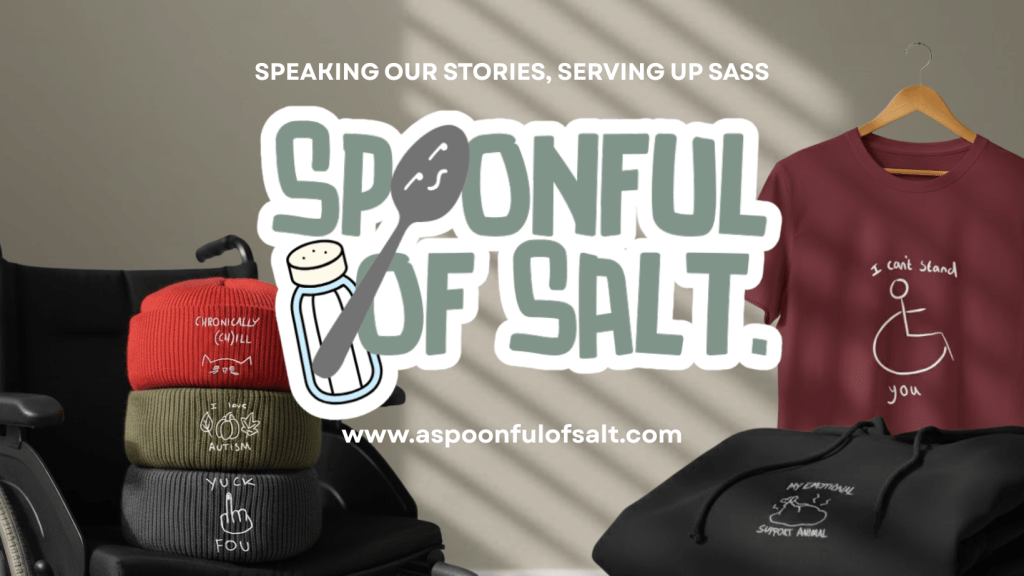
For seven months, I ran a disability humour clothing brand in the UK.
It wasn’t just apparel. It was identity-driven. Community-driven. Context-sensitive.
And it taught me something most e-commerce SEO advice misses:
Revenue isn’t won at awareness.
It’s compounded at consideration.
The Early Days: Community, Momentum… Illusion
Back in the early days, organic worked.
It wasn’t hard to write a relatable post or share experiences to build a community that understood the humour (and the purpose).
Engagement felt strong. Orders came rolling in. It felt like traction.
But here’s what I learned quickly:
Engagement is encouraging. It is not infrastructure.
When organic reached dipped, so did revenue.
That’s when I stopped looking at laughs, likes, and interactions; and I started paying attention to search intent.

The Search Intent Most Brands Ignore
Most e-commerce SEO advice lives in two places:
Top-of-funnel:
“Funny disability t-shirts”
“Disability clothing brand UK”
Bottom-of-funnel:
“Buy adaptive t-shirt UK”
“Disability humour shirt free delivery”
Both matter.
But the real leverage lives in the messy middle.
Searches like:
“disability t-shirts that don’t strangle me when I sit”
“Stylish clothes for wheelchair users that actually fit”
“Funny gift for someone with chronic illness that isn’t patronising”
Those searches are different.
They’re not browsing.
They’re decision-making.
They’re emotionally loaded.
And they convert very differently.
The Math That Changed My Thinking
Let’s simplify it.
1,000 visitors converting at 0.5%
= 5 sales.
300 visitors converting at 4%
= 12 sales.
Less traffic.
More revenue.
Mid-funnel search isn’t glamorous.
It doesn’t spike vanity metrics.
But it compounds.
Especially in niche markets where identity matters.
Because when someone types:
“Clothes that don’t dig in when seated”
They are not casually scrolling.
They are solving a problem.
And if you solve it clearly, they don’t shop around for long.
Where I Went Wrong
I built resonance. I didn’t build a system.
Organic content drove awareness.
But awareness without structure is fragile.
I didn’t prioritise:
- Consideration-stage content hubs
- Fit-focused comparison pages
- Objection-handling SEO
- Retention flows tied to use-cases
In short:
The brand connected.
The funnel wasn’t engineered.
There’s a difference.
What I’d Do Differently Now
If I rebuilt the brand today, I’d focus on three levers:
1. Emotional Precision in Search
Mining real phrases from:
- Reddit threads
- Community groups
- Customer messages
Not “keyword volume.”
Actual language. And language from the communities that I am working with.
2. Mid-Funnel Content Architecture
Guides like:
- “What to Wear Comfortably in a Wheelchair”
- “Funny But Not Patronising: Gift Guide”
Not blog fluff.
Conversion pathways.
3. Translating Data for Humans
Inside the business too.
Because saying:
“CTR is 1.2%”
Means very little.
Saying:
“98 out of 100 people ignored this message.”
Changes the room.
The Bigger Insight
In identity-driven e-commerce, context is everything.
Humour has context.
Accessibility has context.
Search has context.
The brands that win don’t just get seen.
They resolve hesitation.
They are chosen.
And hesitation lives in the consideration stage — where someone is thinking:
“Is this actually for me?”
If your content answers that clearly, revenue compounds.
If it doesn’t, traffic flatters you and leaves.
Where do we go from here?
I still believe in that brand.
Next time, it won’t rely on organic momentum alone.
It will be:
Built with structured intent.
Tested at the consideration stage.
Scaled through systems — not hope or blind faith in the messaging.
Because traffic builds noise.
Consideration builds growth.


 Bethany Neilens
Leave a comment